
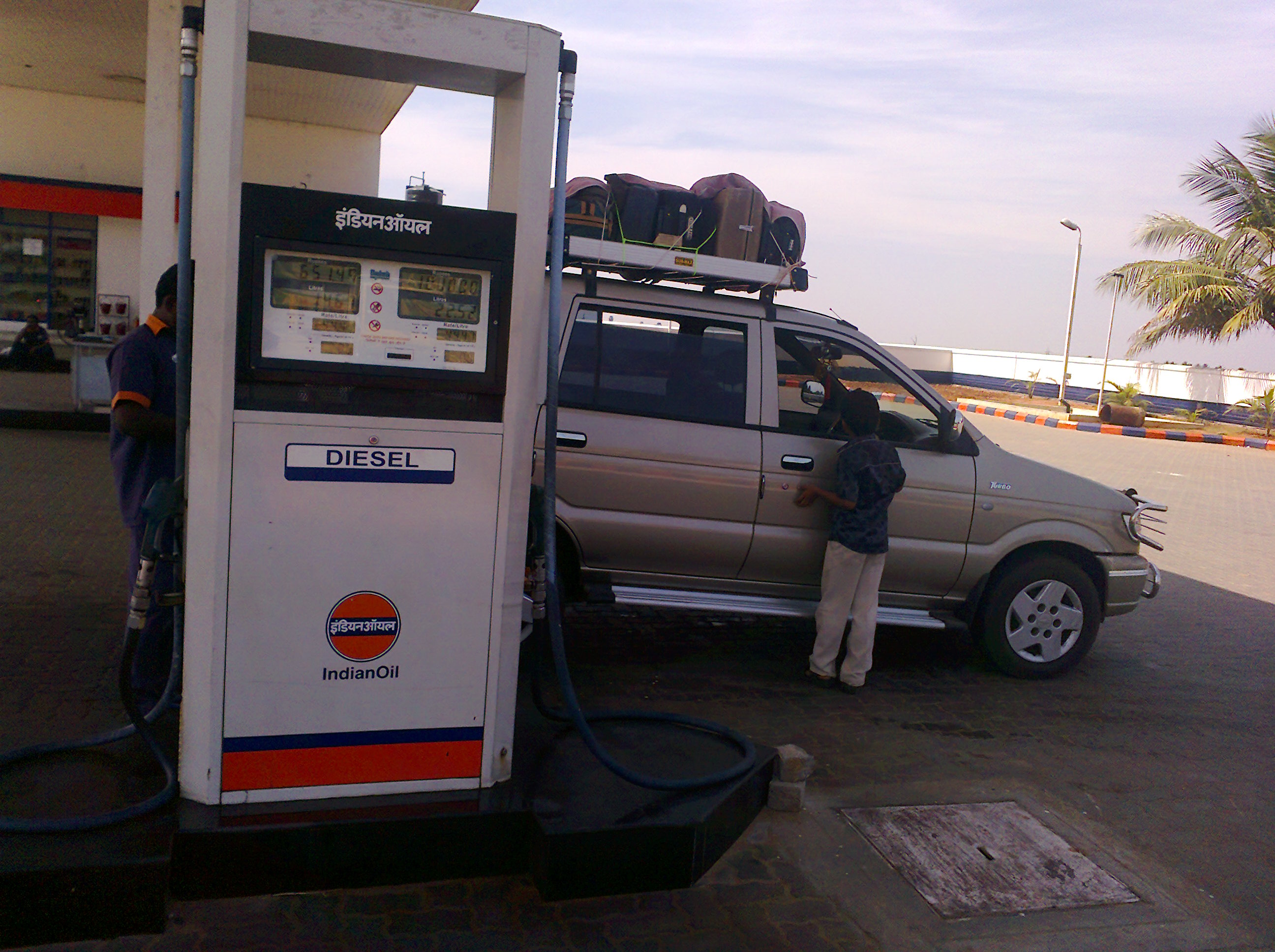
(Superbmust / Wikimedia Commons, CC BY-SA 3.0)
A petrol station (illustrative photo).
Petrol prices in Pakistan have been cut again, falling by Rs3 a litre to Rs322, while high-speed diesel is down by Rs3 a litre to Rs355. The new prices take effect from Thursday 19 November 2026, under a notification issued by the Oil and Gas Regulatory Authority (OGRA) late on Wednesday.
This is the twelfth consecutive cut in the petrol price — a run of daily reductions that began on 2 November and has now brought petrol down by Rs52.51 a litre in 17 days. It is also the first diesel cut in this run: when petrol was cut by Rs3 to Rs325 on 18 November, diesel was left unchanged at Rs358. Today's cut brings diesel down as well, to Rs355.
The reductions are the latest step in a new daily-review mechanism under which OGRA has begun publishing fuel prices on its website every day, replacing the old fortnightly price announcements.
The New Prices
Under the OGRA notification, petrol is down Rs3 a litre to Rs322 and high-speed diesel is down Rs3 a litre to Rs355, effective Thursday 19 November. The two fuels had been at Rs325 and Rs358 respectively after the previous day's announcement.
The ex-refinery price of petrol has fallen to Rs227.45 a litre, down from Rs230.84, reflecting the drop in the international benchmark price. The international benchmark for petrol fell from USD 88.36 to USD 86.41 a barrel, while premiums including freight were unchanged at USD 28.76 a barrel.
Some aggregator pages online are still showing the old Rs325 and Rs358 rates with a 19 November date stamp. Those figures are stale: the Rs322 and Rs355 prices in this article are the ones in the OGRA notification as reported by Dawn, Geo, the Express Tribune and Business Recorder.
How the Cuts Add Up
The scale of the relief is now large. Since 2 November, petrol has fallen from Rs374.51 a litre to Rs322 — a cumulative cut of Rs52.51. The cut to Rs325 on 17 November had already taken Rs49.51 off the price; today's Rs3 reduction adds to that total.
Diesel has followed a different path. It was held at Rs358 while petrol fell, and only today's cut brings it down to Rs355. Diesel matters most for transport and freight, so its reduction should eventually feed through to the cost of moving goods — although transport fares do not fall automatically, and no fare change has been announced.
The daily cuts have been driven by falling international prices and by the government's decision to pass the relief on to consumers each day rather than holding prices steady between fortnightly reviews.
The Levy Stays at Rs80
One thing has not changed: the government continues to collect the full petroleum levy of Rs80 a litre. The levy is a tax built into the pump price, and it means that even as the headline price falls, a large part of what motorists pay still goes to the exchequer.
The levy has been a point of debate throughout the price-cut run. Supporters of the daily cuts point to the Rs52.51 reduction as real relief for households and businesses. Critics note that the levy keeps the price far above the cost of the fuel itself, and that the government has chosen to keep collecting it in full rather than cutting it to deepen the relief.
For now, the mechanism is simple: international prices fall, OGRA publishes a new price each day, and the levy stays where it is. Whether the daily cuts continue will depend on where international prices go next.
What It Means for Households
For motorists, the twelfth cut in a row means cheaper fill-ups: a 40-litre tank of petrol now costs about Rs2,100 less than it did on 2 November. For commuters, the benefit depends on whether bus and wagon operators pass on the lower diesel price — something that has not happened automatically in past price falls.
The bigger question is how long the run lasts. Seventeen days of cuts is already one of the longest sustained falls in pump prices in recent memory, and it has been driven by a fall in the international benchmark. If that benchmark turns upward, the daily mechanism will push prices up just as quickly as it has brought them down.
Related reading: Internet Slows Across Pakistan After SMW5 Cable Fault and Pakistan Test-Fires Fatah-3 Supersonic Cruise Missile. More Pakistan news: Pakistan News.
FAQ
What are the new petrol and diesel prices in Pakistan?
From Thursday 19 November 2026, petrol costs Rs322 a litre and high-speed diesel costs Rs355 a litre, after cuts of Rs3 a litre each under an OGRA notification issued late on Wednesday.
How many times have petrol prices been cut in a row?
Twelve times in a row. The cuts began on 2 November, and petrol has fallen by Rs52.51 a litre in total, from Rs374.51 to Rs322. Today's cut is the first diesel cut in this run.
Is the petroleum levy still Rs80 a litre?
Yes. The government continues to collect the full petroleum levy of Rs80 a litre, even as the pump price falls. The levy is built into the price motorists pay at the pump.
Comments
Post a Comment